

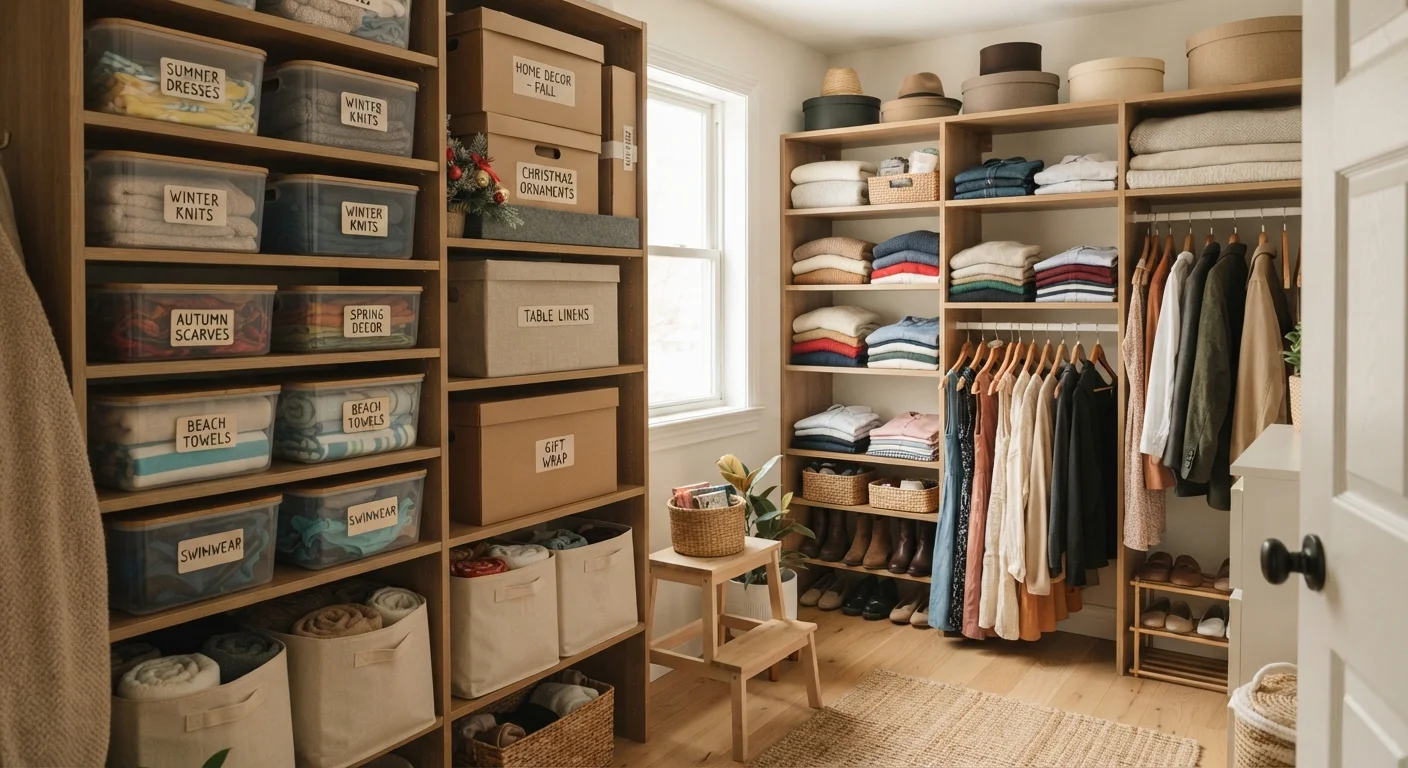
Why a Seasonal Rotation System Works
Most homes don't lack storage space - they lack organized storage space. When winter coats share a closet with summer dresses, or holiday boxes crowd shelves alongside everyday tools, every retrieval becomes a small excavation. The result is visual clutter that makes spaces feel cramped and disorganized even when they are technically tidy.
A seasonal rotation system operates on a simple principle: only what you need now occupies prime accessible space. Everything else moves to a dedicated off-season zone. This approach works across all home sizes and is especially effective in smaller homes where every shelf and drawer does double duty. If you are working with limited square footage, pairing a rotation system with smart vertical and horizontal storage strategies compounds the benefit considerably.
The system also naturally enforces regular decluttering. Each swap is a built-in checkpoint: before items go into storage, you evaluate them. Over time, this prevents the slow accumulation that turns manageable clutter into an overwhelming backlog.
Stackable lidded storage bins
Contain and protect off-season clothing, linens, and décor while stacking efficiently in storage zones.
Vacuum compression bags
Reduce the bulk of bulky items like comforters, sweaters, and coats to reclaim shelf and closet space.
Label maker or permanent marker with adhesive labels
Clearly identify bin contents so you can locate items instantly at the next rotation without opening every box.
Clothing inventory list or simple spreadsheet
Track what is stored where so nothing gets forgotten across multiple storage locations.
How to Execute Your Seasonal Rotation
Follow these steps at each seasonal transition - typically four times per year, though households in mild climates may rotate only twice. Before you begin, gather your containers and labels so the process moves efficiently without interruption.
What you will need
Identify your four rotation categories
Before touching a single bin, decide which categories of items will rotate on a seasonal schedule. The most common are: clothing and footwear, bedding and linens, outdoor and recreational gear, and seasonal décor. Each category has different storage demands - clothing needs breathability, décor needs cushioning - so treating them as distinct groups helps you choose the right containers and locations.
Designate your off-season storage zones
Assign a specific physical location for each category's off-season home. Common choices include an attic or basement for bulky gear and décor, under-bed bins for folded off-season clothing, and high closet shelves for vacuum-packed linens. Keeping categories in consistent zones means you always know where to look - and where to return items after the season ends. For more on maximizing these secondary spaces, see our guide on organizing garage, attic, and basement areas.
Audit before you store - not after you retrieve
Each time you pull items out of active rotation, evaluate them honestly: Does this still fit? Is it damaged? Did I use it at all last season? Removing unwanted items before they go into storage prevents clutter from compounding. Donate, repair, or discard anything that doesn't earn its space. This one habit keeps your stored inventory lean and makes next season's retrieval faster. For a deeper look at wardrobe-specific decisions, see transitioning your wardrobe between seasons.
Clean everything before it goes into storage
Storing soiled items is one of the most common seasonal organization mistakes. Stains set over months, odors embed into fabric, and food residue on gear can attract pests. Wash or dry-clean clothing and linens. Wipe down décor pieces and let them air-dry fully. Clean and dry all outdoor gear, especially items that contact soil or moisture. A little upfront effort protects your stored belongings and means everything comes out fresh and ready to use.
Pack and label bins with retrieval in mind
Group related items together within bins - all summer footwear in one container, all winter throw blankets in another. Write labels on both the lid and at least one side of each bin so you can read them whether the container is stacked or facing any direction. Include a brief contents list if a bin holds a variety of items. For seasonal décor especially, noting the room destination on the label (e.g., Living Room - Winter) cuts unpacking time significantly.
Set calendar reminders for your rotation windows
Seasonal organization only works if the rotations actually happen on schedule. Set recurring calendar reminders approximately two to three weeks before each major season change. This buffer gives you time to shop for any incoming-season needs before the swap, rather than after. Tying your rotation to an existing routine - like a seasonal home maintenance checklist - can help reinforce the habit without requiring a separate mental tracking system.
Once your system is running, you may find it worth extending the same organizational thinking to other areas of the home. Zone-based organization pairs naturally with seasonal rotation by giving every category of item a defined home at all times - whether it is in active use or in storage.
Maintaining the System Long-Term
The rotation framework only delivers ongoing benefit if it stays consistent. A few habits protect the system between swap cycles:
- Return items to the correct zone immediately after use rather than leaving them in active-use areas past their season.
- Resist impulse additions to storage bins. If a new item doesn't fit within an existing category, define a new category with its own clear home rather than letting it drift into a miscellaneous bin.
- Reassess bin quantities annually. If you consistently find bins overfull at swap time, that is a signal to declutter more aggressively - not to add more bins.
If you share a home with others, a brief walkthrough of the system's logic once a year helps everyone maintain it. The more intuitive the labeling and zones, the less explanation it requires over time. For apartment dwellers managing tighter constraints, strategies for organizing a small apartment offer additional approaches that complement a rotation system.
Use Clear Bins for High-Turnover Categories
For items you retrieve or rotate frequently - like seasonal décor or children's clothing - clear-sided bins save time by letting you confirm contents at a glance without opening each container. Opaque bins work well for long-term, rarely accessed storage where label-reading is sufficient.
The content on this site is for informational purposes only and is not a substitute for professional advice. Always consult a qualified professional for guidance specific to your situation.