

Option A
Vertical Storage
The space-multiplying approach that builds upward.
Best for: Renters and homeowners with limited floor area who need to maximize capacity without expanding their footprint.
Option B
Horizontal Storage
The grounded, accessible approach that keeps things within reach.
Best for: Households prioritizing easy access, visual stability, and lower-profile furniture arrangements.
Understanding the Core Difference
When floor space is limited, every storage decision carries real weight. The fundamental question is whether to build up - using wall height - or out, spreading storage across the floor plan. Both directions have distinct strengths, and the right emphasis depends on your room's dimensions, your daily habits, and what you're storing.
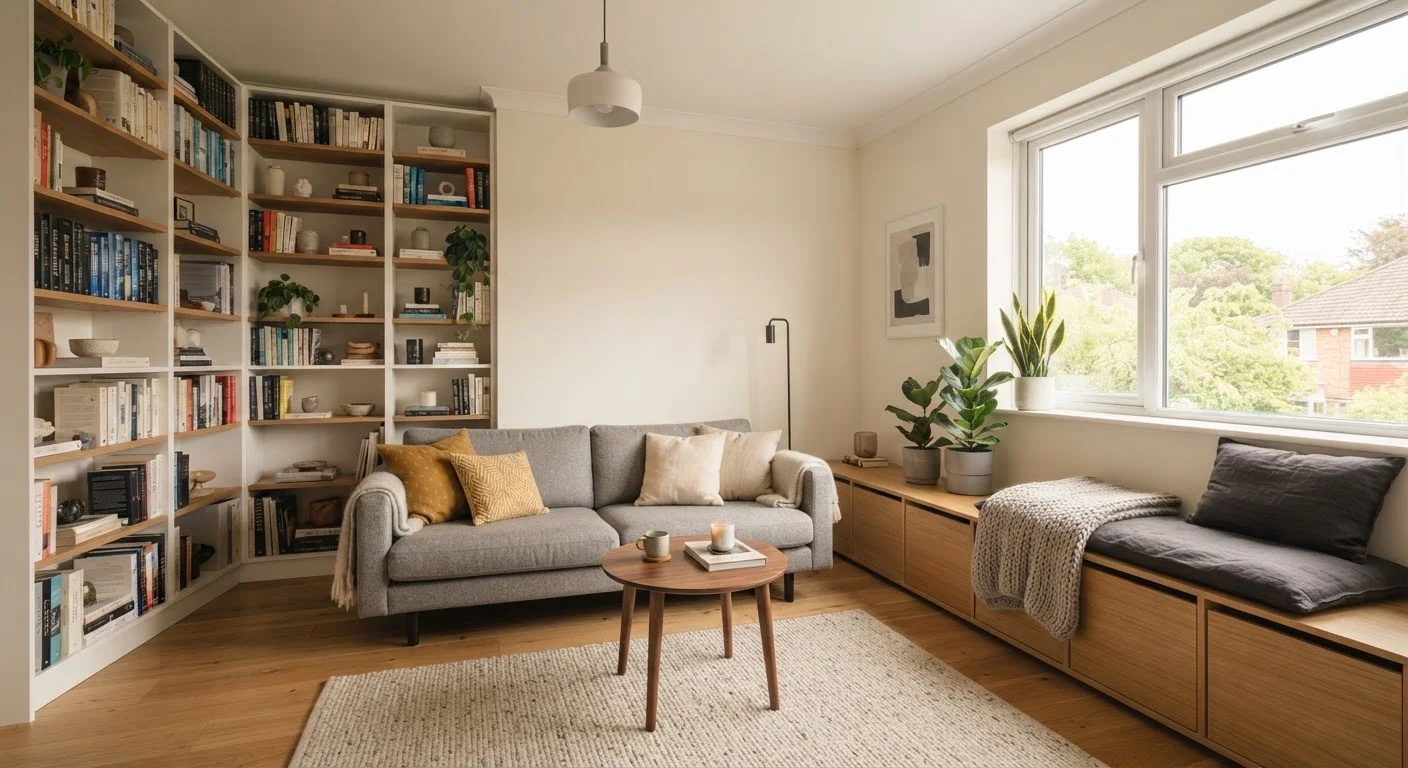
Vertical storage refers to any system that stacks or mounts above counter height: floor-to-ceiling shelving, wall-mounted cabinets, pegboards, stackable drawers, and tall wardrobes. Horizontal storage keeps things spread laterally at or below seated eye level: storage ottomans, low credenzas, under-bed drawers, and wide built-in benches.
Neither approach is universally superior. The tension between them is less about which is better and more about which fits your specific constraints - and how intelligently you combine both. If you're wrestling with broader organization challenges, common storage myths may also be shaping how you think about the problem.
| Criterion | Vertical Storage | Horizontal Storage |
|---|---|---|
| Floor footprint | Minimal - builds upward | Larger - spreads laterally |
| Total capacity | High when ceiling is tall | Moderate; limited by floor area |
| Accessibility | Variable; overhead items harder to reach | Consistently easy to reach |
| Safety considerations | Must be wall-anchored; climbing risk | Lower risk; stable base |
| Visual effect | Draws eye up; can feel airy | Keeps sightlines open; feels grounded |
| Best for | Infrequent-use and overflow items | Daily-use and visible essentials |
| Renter-friendliness | Varies; anchoring may be restricted | Generally renter-friendly |
Where Vertical Storage Excels - and Where It Falls Short
The primary advantage of vertical storage is simple math: a wall eight feet tall has roughly twice the usable surface area of a four-foot-wide footprint on the floor. In studios, galley kitchens, and small bedrooms, tall shelving or cabinet units let you store far more without shrinking the room visually. In fact, drawing the eye upward can make a space feel taller and more open.
Vertical systems also lend flexibility. A modular shelving unit can be reconfigured as your needs change, making it well-suited to renters or anyone who moves frequently. For multi-use rooms, tall shelves can serve as a soft room divider, a benefit explored further in strategies for small apartment organization.
The limitations are real, however. Items stored above shoulder height are harder to reach safely, especially for older adults or anyone with limited mobility. Tall units require secure wall anchoring - an absolute safety necessity, not a suggestion - and in some rental situations, wall anchoring may be restricted. Overhead storage also makes it tempting to accumulate and forget; items stashed high tend to go unreviewed for months or years.
~50%
Typical unused wall height in average rooms
Interior design professionals commonly estimate that the upper half of most walls in American homes goes entirely unused for storage purposes.
400-600 sq ft
Average U.S. studio apartment size
According to U.S. Census Bureau housing data, studio and efficiency apartments in this range represent a significant share of urban rental stock, making vertical strategies especially relevant.
Where Horizontal Storage Excels - and Where It Falls Short
Horizontal storage shines for accessibility and visual calm. A low storage bench at the foot of a bed, a wide credenza in a living room, or under-bed drawers - these keep everyday items within comfortable reach and avoid the overhead strain that tall storage can require. For households with young children, keeping items at a consistent, reachable height also reduces climbing hazards.
From a design standpoint, lower storage keeps sightlines open, which can make a small room feel less cluttered even when it holds a significant amount of stuff. A low media cabinet, for example, preserves the visual expanse of a wall rather than filling it with shelving.
The constraint is floor area. Wide, low furniture claims square footage that in a compact space might otherwise allow for movement or additional seating. In a 400-square-foot studio, every foot of floor-level footprint matters. Horizontal storage also rarely offers enough total capacity on its own to meet the needs of a fully furnished small home - you'll almost always need some vertical component as well. For rooms like kitchens, this trade-off is especially pointed; open shelving versus closed cabinets adds another dimension to the conversation.
A Note on Wall Anchoring and Safety
Any tall shelving unit, bookcase, or wardrobe that stands more than about four feet tall should be anchored securely to wall studs. Unanchored tall furniture poses a serious tip-over risk, particularly in homes with children. Most manufacturers include anti-tip hardware with their products. If you are unsure how to locate studs or anchor furniture safely, consult a handyman or contractor - it is a straightforward job that significantly reduces risk.
How to Combine Both Approaches Effectively
For most small spaces, the most practical answer is a zoned combination: use vertical storage for items accessed weekly or less - seasonal gear, spare linens, reference books - and reserve horizontal storage for daily essentials and items that benefit from easy visibility.
A useful mental framework is the access ladder: the most-used items live between knee and shoulder height (your prime zone), moderately used items go above shoulder height, and rarely used items occupy the highest shelves or deepest under-bed drawers. This applies regardless of whether a given unit is oriented vertically or horizontally.
Room-specific applications help clarify the approach. In a bedroom, a tall wardrobe handles hanging clothes and folded items while under-bed storage handles off-season pieces - a complement covered in detail in seasonal rotation strategies. In a living room, wall-mounted shelves hold books and décor while a low console or ottoman with storage handles remotes, throws, and everyday items.
Before committing to any large storage purchase, measure your ceiling height, map your traffic paths, and consider whether the units you're eyeing can be anchored safely. In spaces like garages or basements - areas prone to overflow - secondary storage zones often need their own distinct approach.
The content on this site is for informational purposes only and is not a substitute for professional advice. Always consult a qualified professional for guidance specific to your situation.