

Our Verdict
Both indoor and outdoor lifestyles carry real trade-offs for cats. Indoor cats generally live longer and face fewer acute dangers, but need consistent enrichment to thrive. Outdoor cats enjoy richer sensory experiences but are exposed to serious, sometimes fatal, risks. For most owners in urban and suburban settings, a carefully enriched indoor environment — possibly with supervised outdoor access — represents a well-supported approach to feline welfare.
This article is most useful for cat owners deciding how to structure their cat's environment, or those reconsidering current arrangements as their cat's health or circumstances change.
Why the Indoor vs. Outdoor Question Matters
The environment a cat lives in shapes its lifespan, physical health, behavior, and psychological well-being in profound ways. This isn't simply a preference debate — it's a welfare question backed by veterinary research and behavioral science.
Cats are obligate carnivores with deep predatory instincts, but domesticated cats have also adapted remarkably well to indoor life when their needs are met. Understanding the genuine advantages and limitations of each lifestyle helps owners make grounded, confident decisions rather than choosing based on habit or convenience.
For a broader view of how daily choices affect long-term feline health, see Small Habits That Make a Big Difference in Pet Longevity.
The Case for Keeping Cats Indoors
Indoor cats are consistently shown to live longer average lives than their outdoor counterparts. Estimates from veterinary organizations suggest indoor cats may live two to three times longer, largely because they avoid the most common causes of early feline death: vehicle strikes, infectious disease, predation, and poisoning.
Significantly longer average lifespan
Indoor cats are sheltered from the most common causes of early death, including road traffic accidents, infectious diseases spread by other cats, and predator attacks. Veterinary consensus consistently supports this longevity advantage.
Reduced exposure to parasites and infectious disease
Without contact with wildlife, stray cats, or contaminated soil, indoor cats face substantially lower risks of conditions like feline leukemia virus (FeLV), feline immunodeficiency virus (FIV), and intestinal parasites.
Easier health monitoring for owners
Changes in appetite, elimination habits, or activity levels are more immediately visible indoors, enabling earlier detection of health problems before they become serious.
No risk of getting lost or stolen
Indoor cats cannot wander into unfamiliar territory, become disoriented, or be picked up by others — a genuine concern in urban and suburban settings.
Lower environmental impact
Outdoor cats are known to prey on native wildlife, including songbirds. Keeping cats indoors eliminates this ecological pressure entirely.
Indoor life also gives owners far more control over nutrition, parasite prevention, and veterinary monitoring. Behavioral issues like inappropriate elimination are more easily identified and addressed indoors — and are often medically rooted rather than behavioral, as explored in our guide to litter box problems.
The core challenge indoors is stimulation. Without deliberate enrichment — climbing structures, interactive play, puzzle feeders, and window access — cats can develop stress-related behaviors such as over-grooming, aggression, or compulsive eating.
10–15 years
Typical indoor cat lifespan
Veterinary organizations commonly cite this range as the average for well-cared-for indoor cats, compared to estimates of 2–5 years for free-roaming outdoor cats.
~2–5 years
Estimated outdoor/feral cat lifespan
Free-roaming cats face significantly higher mortality risks; this figure reflects average estimates cited across multiple feline welfare studies and veterinary sources.
The Case for Outdoor Access
Outdoor environments provide cats with rich, variable sensory input that is genuinely difficult to replicate indoors: changing smells, natural light cycles, the ability to stalk and hunt, and space to move at speed. These experiences align with hardwired feline instincts and can support psychological well-being.
Risk of boredom and behavioral problems
Without sufficient enrichment, indoor cats may develop stress responses such as over-grooming, redirected aggression, or destructive behavior. Owners must actively create stimulating environments.
Greater exposure to traffic and physical danger
Outdoor cats are at meaningful risk of vehicle strikes, which represent one of the leading causes of injury and death in free-roaming cats, particularly in suburban and urban neighborhoods.
Higher disease and parasite burden
Contact with other cats, wildlife, and soil exposes outdoor cats to a broader range of pathogens and parasites, requiring more intensive preventive care and veterinary monitoring.
Risk of predation and animal conflict
Dogs, coyotes, birds of prey, and other cats can injure or kill free-roaming cats. Bite wounds from cat fights are a particularly common source of painful abscesses and disease transmission.
Harder to monitor health changes
When a cat spends significant time outside, subtle changes in behavior, appetite, or elimination that might signal illness can go unnoticed until a condition becomes more advanced.
For cats with prior outdoor experience or strong predatory drives, full indoor confinement can introduce its own welfare concerns, including chronic stress or frustration. The right answer isn't always straightforward, and a closer look at the health trade-offs across a cat's lifetime can help clarify the picture.
Consider Your Cat's History and Temperament
A cat that has lived outdoors for years may experience genuine distress if abruptly transitioned to a fully indoor life. Conversely, a cat raised entirely indoors from kittenhood often has no strong drive to roam. There is no single right answer — individual temperament, prior experience, local environment, and health status all factor into what works best for a specific cat. A veterinarian familiar with your cat's history is the best resource for personalized guidance.
Middle-Ground Options Worth Considering
Many owners find that a hybrid approach offers meaningful benefits from both worlds while reducing the most serious outdoor risks. Common options include:
- Catio or enclosed outdoor run: A secure, predator-proof structure attached to the home lets cats experience fresh air, sunlight, and natural sounds without unsupervised roaming.
- Leash and harness training: Some cats adapt well to supervised walks, though patience and gradual introduction are essential.
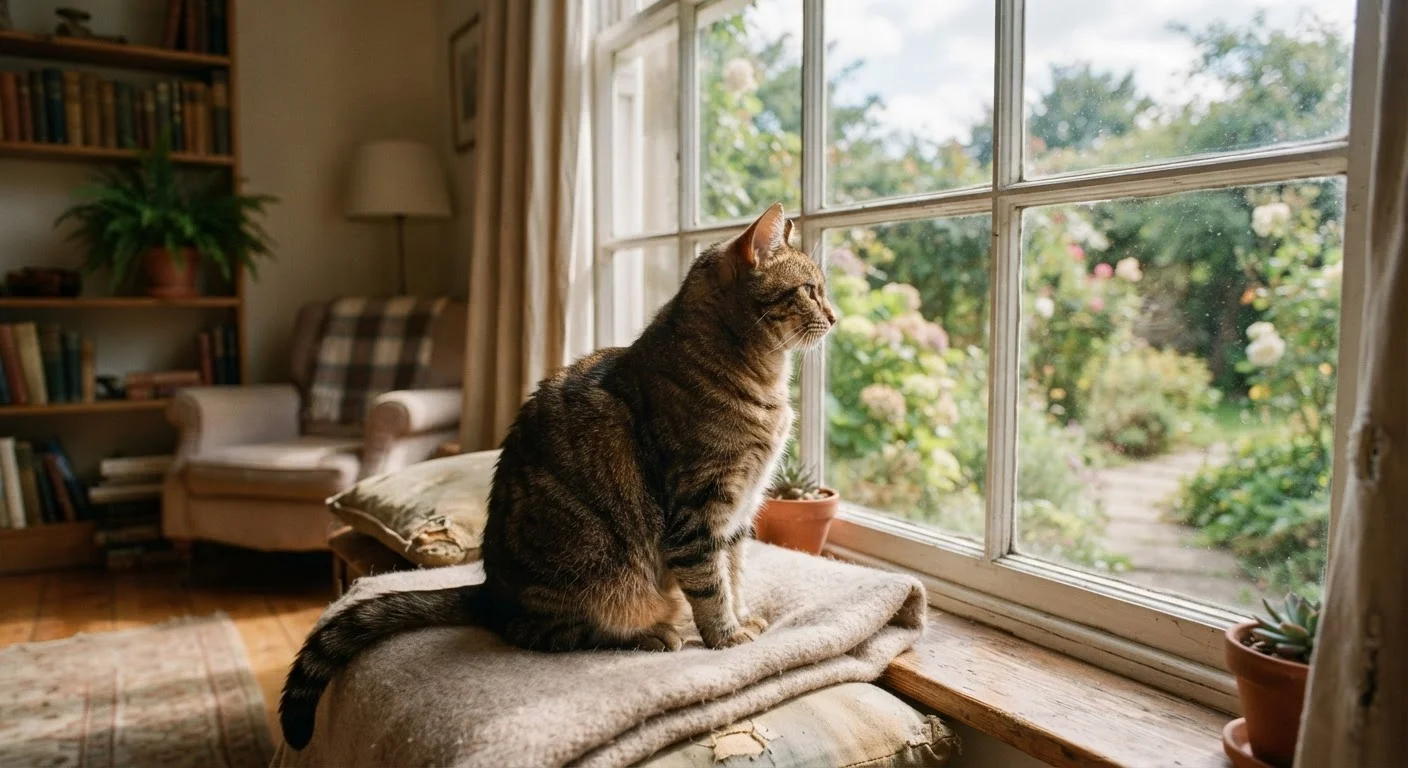
- Screened porches or window perches: Even passive outdoor access — watching birds and squirrels from a safe vantage — provides meaningful enrichment.
Whatever approach you take, nutritional quality remains a consistent factor in your cat's overall health. The Pet Health & Wellness hub and our article on wet food, dry food, and everything in between are useful companions to this decision.
This article is for general informational purposes only and does not substitute for personalized veterinary advice. Consult a licensed veterinarian for guidance specific to your cat's health needs and circumstances.
The content on this site is for informational purposes only and is not a substitute for professional advice. Always consult a qualified professional for guidance specific to your situation.