

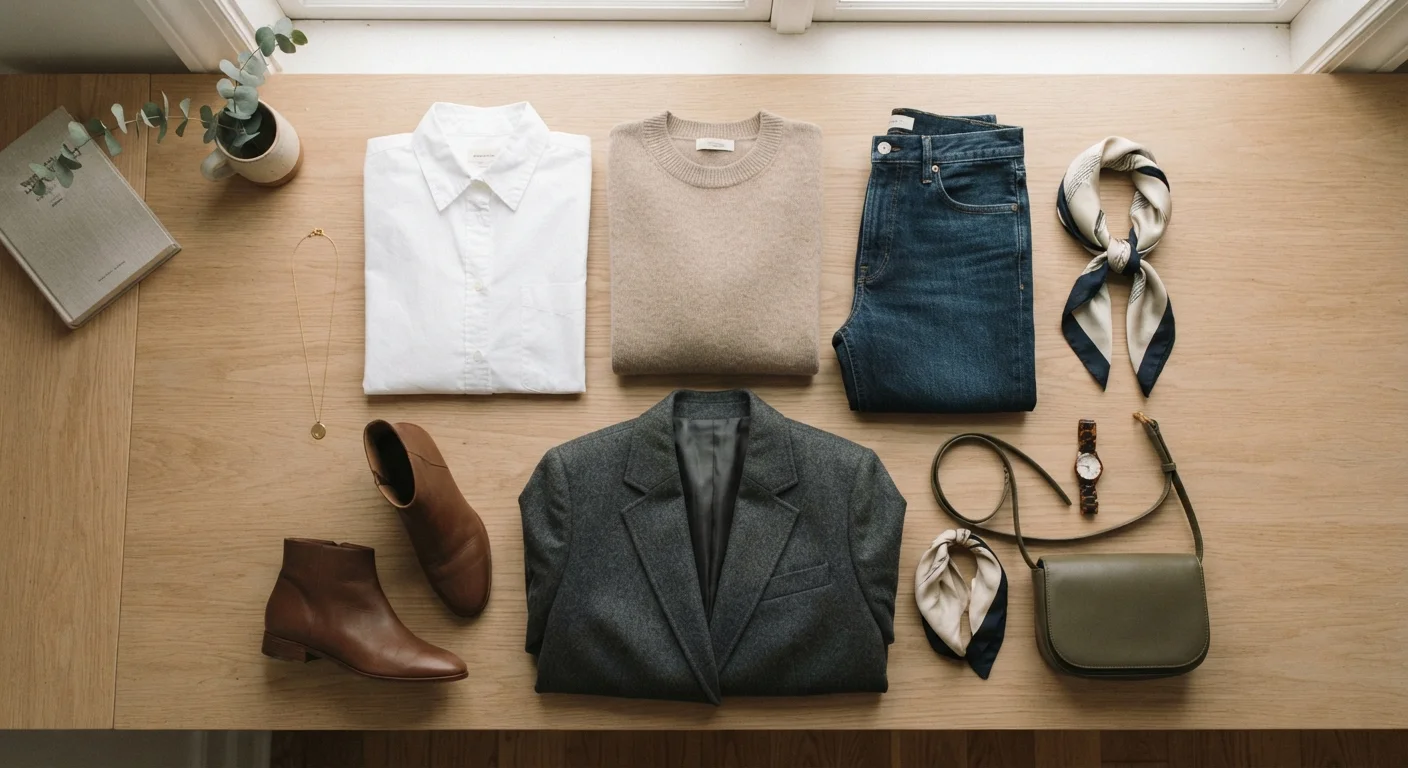
What a Capsule Wardrobe Actually Is
Strip away the Pinterest aesthetics and the minimalist lifestyle branding, and a capsule wardrobe is a pretty simple idea: own fewer clothes, but make sure the ones you keep can do more. Every piece should earn its place by being wearable in multiple combinations, across different settings, and over many seasons.
Think of it less as a style philosophy and more as a practical system. Instead of opening your closet and feeling overwhelmed by options you never reach for, you open it and find a manageable set of things that actually work — for your body, your routine, and your day-to-day life. That's the whole concept.
It's worth noting what a capsule wardrobe is not: it's not a challenge to own as few items as possible, it's not a strict aesthetic rulebook, and it's not only for people with large budgets or minimalist sensibilities. It's a framework you adapt to fit your real life — not an aspirational one. For more on that distinction, see dressing for your actual daily life.
Capsule Wardrobes Are Flexible by Design
There's no single correct capsule wardrobe — the concept is a framework, not a formula. What works for a teacher in Minnesota will look different from what works for a freelancer in Miami or a parent managing school runs and office days. The unifying thread is intentionality: every piece you keep should serve a real purpose in your actual life.
Why Fewer Pieces Produce More Outfit Options
This is the part that surprises most people: a well-built capsule wardrobe can generate more usable outfits than a closet stuffed with mismatched pieces. The reason is mathematical as much as stylistic.
When every item in your wardrobe pairs with at least three or four others, the number of combinations multiplies quickly. A collection of 30 intentional pieces can produce dozens of distinct looks. A closet of 100 items where only half of them go together leaves you stuck, despite the abundance.
80%
Of wardrobe items rarely or never worn
Research from various closet organization studies consistently finds that most people regularly wear only about 20% of the clothes they own.
25–50
Typical capsule wardrobe item count
Most style frameworks suggest a working capsule of 25 to 50 pieces — enough variety without overwhelming combination fatigue.
100+
Outfit combinations from 30 cohesive pieces
When pieces are chosen for mutual compatibility, a 30-item wardrobe can mathematically produce well over 100 distinct outfit combinations.
The key mechanism is cohesion. Pieces that share a complementary color palette, similar tonal weight, or a consistent level of dressiness naturally layer and swap with each other. That's why many capsule wardrobes lean on neutrals or a tight color family — not because color is off-limits, but because cohesion is what makes mixing easy. You can explore that balance further in our piece on neutral vs. colorful wardrobes.
The Core Elements That Make It Work
A capsule wardrobe typically anchors around a set of reliable, high-wearability staples — pieces that work across multiple outfit combinations and don't go out of style season to season. Common examples include well-fitting trousers or dark denim, a classic white or cream top, a structured layer like a blazer or jacket, a comfortable knit, and versatile shoes that span casual and polished settings.
Beyond the specific items, three principles hold the system together:
- Fit: A piece that fits well reads as intentional regardless of price. Ill-fitting clothes, however classic, won't work as hard as they should.
- Color cohesion: Items that share tonal compatibility mix effortlessly. You don't have to think — things just go together.
- Lifestyle alignment: Your capsule should reflect what you actually do most days — not a fantasy version of your schedule. A wardrobe built around weekend brunches won't serve someone who's mostly outdoors or in an active workplace.
Audit Before You Add Anything New
Before buying a single new item, do a quick audit of what you already own. Lay everything out and ask: Does this fit well? Does it go with at least three other things I own? Have I worn it in the past year? Pieces that answer 'no' to two or more questions are probably not earning their place. Knowing what you have prevents you from buying things you already own in slightly different form.
For reliable combinations that take the guesswork out of getting dressed, outfit formulas that work across nearly any situation offer a practical companion to the capsule concept.
How to Start Building One (Without Starting Over)
You don't have to empty your closet and start from zero to adopt this approach — and you probably shouldn't. Most people already own several pieces that function as genuine capsule staples. The first move is identifying those items: what do you actually reach for? What goes with almost everything else you own?
From there, building a capsule wardrobe is a gradual, intentional process. Gaps become visible once you know what you're working with. Maybe you have great tops but no versatile bottom to anchor them. Maybe your outwear isn't working with the rest. You fill those gaps over time — replacing impulse buys with deliberate additions.
For anyone rebuilding from scratch or feeling like their wardrobe has no real foundation, our guide on building a wardrobe from scratch walks through the core pieces, color logic, and how to approach shopping with intention. And for the full picture of how all these elements connect, the complete guide to building a wardrobe that works covers everything from fit to fabric to seasonal dressing.
Frequently Asked Questions
Most approaches suggest somewhere between 25 and 50 items, including clothing, shoes, and outerwear — though there's no fixed rule. The right number depends on your lifestyle, climate, and how often you do laundry. The goal is a count that feels manageable and deliberate, not a specific magic number.
No — neutrals are popular because they mix easily, but you can absolutely build a capsule around a color palette you love. What matters is that the pieces work well together. A thoughtful color-forward wardrobe can be just as functional as a neutral one if the tones complement each other.
Yes. Many people maintain a single capsule that spans casual and professional settings using versatile anchor pieces — like dark trousers, a classic blazer, or a clean knit. Others keep a small separate work capsule. The approach adapts to your actual routine rather than demanding one.
Not at all. A good first step is identifying which items you already own that function as versatile staples, and building from there. You don't need to discard things wholesale — you simply become more intentional about what earns a permanent spot in your rotation.
Not necessarily. The shift is from frequent impulse purchases to fewer, more deliberate ones. Over time, many people find they spend less overall because they stop buying things they never wear. Budget and thrift-friendly options can absolutely be part of a capsule wardrobe.
The content on this site is for informational purposes only and is not a substitute for professional advice. Always consult a qualified professional for guidance specific to your situation.