

Our Verdict
Smart thermostats deliver genuine convenience and can contribute to lower energy bills, especially in homes where heating and cooling habits have been inconsistent. However, the learning features are often overstated — homes with already-efficient schedules or irregular occupancy may see modest savings at best. The technology is solid, but it works best when matched to the right home setup.
Homeowners with compatible HVAC systems, predictable daily routines, and an interest in monitoring and managing home energy use remotely.
What Smart Thermostats Actually Do
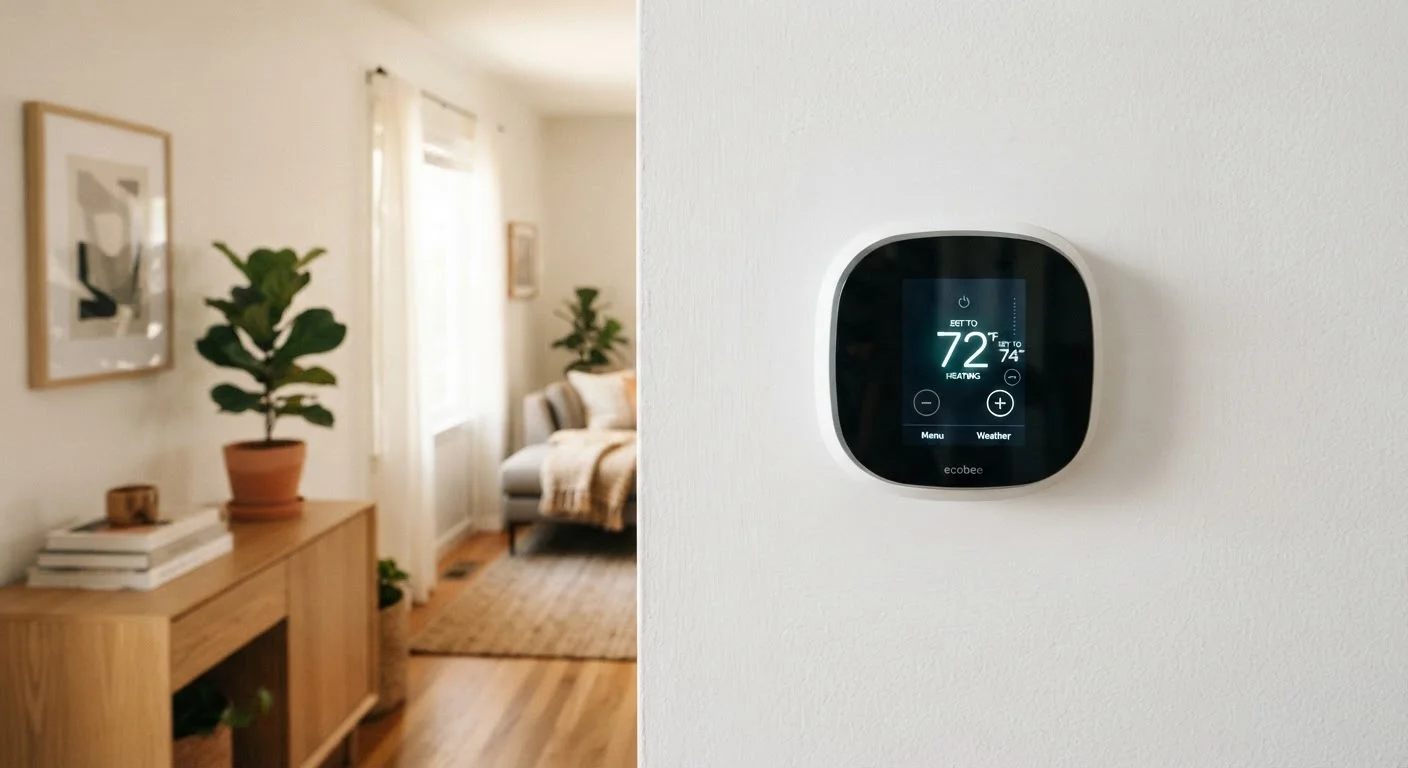
A smart thermostat connects to your home's Wi-Fi network and lets you control your heating and cooling system remotely through a smartphone app. Most models also offer scheduling tools, occupancy detection using built-in sensors or phone location data, and some form of usage reporting.
The "learning" functionality that many devices advertise works by observing when you manually adjust temperatures and gradually building a schedule around those patterns. This process typically takes two to four weeks and assumes your routine is consistent enough to model reliably.
Smart thermostats fit into the broader category of connected home technology. If you're already exploring that space — from security cameras to smart displays — see our guide to smart home security hardware for context on how these devices integrate.
Remote control from anywhere with a smartphone
Adjusting your home's temperature before you arrive or when you forget to turn it down saves energy without requiring a fixed schedule.
Automated scheduling reduces manual effort
Once configured, a smart thermostat handles temperature changes throughout the day so you don't have to — particularly useful for households with consistent routines.
Energy usage reports increase awareness
Most smart thermostats provide monthly or weekly summaries showing how long your system ran, helping you identify patterns and adjust habits.
Potential to lower heating and cooling bills
For homes that previously ran HVAC without any scheduling, smart thermostats can reduce runtime during unoccupied hours, which directly reduces energy consumption.
Integrates with other smart home devices
Many models work with voice assistants and other smart home platforms, allowing coordinated control of lighting, security, and climate from one interface.
The Honest Case Against Smart Thermostats
The marketing around smart thermostats tends to lead with dramatic energy savings figures, but independent research and real-world data suggest outcomes are far more variable. The biggest driver of savings isn't the thermostat's intelligence — it's simply whether you were previously running your HVAC inefficiently. If you already used a programmable schedule, the gains can be minimal.
Learning features require consistent occupant schedules
If your household's routine varies significantly day to day, the algorithm may struggle to build an accurate model, limiting the benefit of the learning capability.
Savings are modest for already-efficient households
Homes that already use programmable thermostats or maintain disciplined temperature habits may see little measurable difference in energy costs.
Not universally compatible with all HVAC systems
Older wiring, certain heat pumps, and multi-stage systems can create compatibility issues that require additional hardware or make installation impossible without professional help.
Collects occupancy and behavioral data
Smart thermostats transmit usage patterns and occupancy data to manufacturer servers, raising privacy considerations that vary by brand and regional data laws.
Higher upfront cost than standard programmable models
Smart thermostats cost significantly more than basic programmable alternatives, meaning the payback period can stretch well beyond the first year in lower-usage homes.
Check Compatibility Before You Buy
Smart thermostat compatibility depends on your HVAC system's wiring, particularly whether a common wire (C-wire) is present. Many older systems lack this wire, which some models require for continuous power. Most manufacturers offer free online compatibility checkers — use them before purchasing. If you're unsure, a licensed HVAC technician can assess your setup.
Compatibility is another practical barrier. Homes with older wiring, certain heat pump configurations, or multi-stage systems may require an adapter or may not support smart thermostats at all. Checking compatibility before purchase is an essential step most buyers overlook.
Energy Savings: Separating Fact From Hype
Studies on smart thermostat performance show a wide range of outcomes. The U.S. Department of Energy notes that adjusting your thermostat by 7–10°F for eight hours a day can save roughly 10% annually on heating and cooling costs. A smart thermostat can help automate that discipline — but it can't do more than you program or permit it to do.
~10%
Potential annual HVAC savings from consistent temperature setbacks
According to the U.S. Department of Energy, setting back the thermostat 7–10°F for eight hours daily can yield roughly 10% in annual heating and cooling costs.
2–4 weeks
Typical time for learning algorithms to build a schedule
Most smart thermostat manufacturers indicate their learning features need several weeks of occupant behavior data before they begin operating autonomously.
Households with irregular schedules, multiple occupants with different preferences, or homes in mild climates may see the smallest return. Conversely, households that previously left the system running at full tilt all day stand to benefit most.
This mirrors broader principles in personal finance: consistent, automated habits tend to outperform sporadic manual effort. If that logic resonates, the case for automating savings makes for a useful parallel read.
Privacy and Data Considerations
Smart thermostats collect data on when your home is occupied, how often you adjust temperature, and sometimes your location. This data is used to improve scheduling algorithms, but it is also stored on manufacturer servers and subject to each company's privacy policy.
This is worth understanding before installation, particularly if you have concerns about third-party data sharing. The privacy questions around smart thermostats are similar in nature to those raised about other connected devices — our piece on smart speaker privacy myths covers how to think through these tradeoffs more broadly.
Most manufacturers allow you to limit data collection or opt out of cloud features, though doing so often reduces the device's functionality. Review the privacy settings during setup rather than accepting defaults without consideration.
Making the Decision for Your Home
Before installing a smart thermostat, confirm your HVAC system is compatible — most manufacturers provide online compatibility checkers. Also consider whether your household has a predictable enough routine for learning features to function as advertised.
If your home already has energy-efficient habits and a working programmable thermostat, the upgrade may offer more convenience than meaningful savings. If your heating and cooling has been running without any schedule at all, the investment is more likely to pay off over time.
Energy management is just one dimension of home efficiency. Decisions like choosing between water heater types involve similarly layered cost-benefit thinking that rewards doing the homework upfront.
This article is for general informational purposes only. Energy savings estimates vary by home, location, and HVAC system. Consult a licensed HVAC professional for advice specific to your equipment and home configuration.
The content on this site is for informational purposes only and is not a substitute for professional advice. Always consult a qualified professional for guidance specific to your situation.